
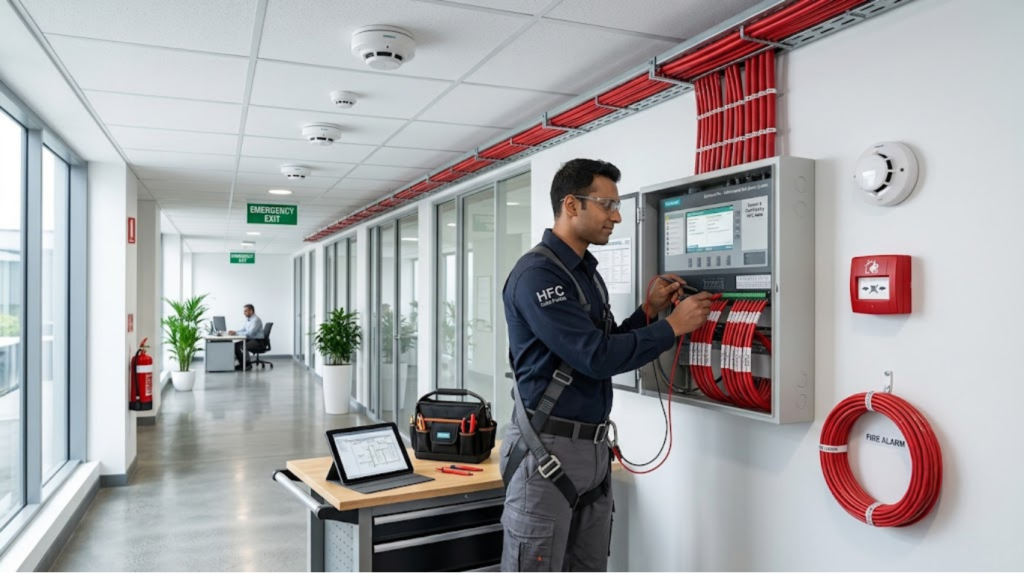
Fire safety is no longer an option—it’s a necessity. Whether you own a home, office, warehouse, factory, hospital, or commercial building, investing in professional fire alarm installation can save lives, protect valuable assets, and minimise property damage.
A professionally installed fire alarm system provides early detection of smoke, heat, or fire, allowing occupants to evacuate safely while emergency services respond quickly. However, installing the right system involves much more than placing smoke detectors on walls. It requires proper planning, system design, wiring, testing, and ongoing maintenance
In this guide, we’ll explain everything you need to know about fire alarm installation services, including system types, installation process, costs, legal requirements, and how to choose a certified fire alarm installer.
What is Fire Alarm Installation?
Fire alarm installation is the process of designing, installing, connecting, testing, and commissioning a fire detection system that alerts building occupants when smoke, heat, or fire is detected.
A complete installation typically includes:
- Smoke detector installation
- Heat detector installation
- Fire alarm panel installation
- Fire alarm wiring
- Fire alarm cable installation
- Alarm sounders and manual call points
- Fire alarm commissioning
- System testing and certification
Professional installation ensures the entire system operates reliably during an emergency.
Why Fire Alarm Systems Are Important
A fire can spread within minutes. An early warning system gives occupants valuable time to evacuate and enables firefighters to respond sooner.
Benefits of professional fire alarm system installation include:
- Early fire detection
- Protection of lives and property
- Compliance with fire safety regulations
- Reduced business downtime
- Lower insurance risks
- Faster emergency response
Whether it’s commercial fire alarm installation, residential fire alarm installation, or industrial fire alarm installation, every building benefits from a properly designed system.
Types of Fire Alarm Systems
Choosing the right system depends on your building size, occupancy, and safety requirements.
Addressable Fire Alarm Installation
An addressable system identifies the exact detector or device that has triggered the alarm.
Ideal for:
- Large commercial buildings
- Hospitals
- Hotels
- Educational institutions
- High-rise buildings
Advantages include:
- Faster fault identification
- Easier maintenance
- Greater accuracy
- Reduced false alarms
Conventional Fire Alarm Installation
A conventional system divides the building into zones instead of identifying individual devices.
Suitable for:
- Small offices
- Retail stores
- Residential buildings
- Small factories
These systems are cost-effective and easier to install in smaller properties.
Fire Alarm System Installation Process
Professional fire alarm installation services generally follow a structured process.
1. Site Survey
The installer evaluates the building layout, occupancy, fire risks, and evacuation routes.
2. Fire Alarm System Design
The system is designed according to building requirements and applicable safety standards.
This includes:
- Detector placement
- Cable routing
- Fire alarm panel location
- Manual call points
- Sounders and notification devices
3. Fire Alarm Wiring
Proper wiring ensures reliable communication between all devices.
Correct fire alarm wiring also reduces future maintenance issues.
4. Detector Installation
The installer performs:
- Smoke detector installation
- Heat detector installation
Each detector is positioned according to its intended environment.
5. Fire Alarm Panel Installation
The control panel acts as the brain of the system, receiving signals from detectors and activating alarms.
6. Fire Alarm Commissioning
Once installation is complete, technicians test every component to verify proper operation.
This stage includes fire alarm commissioning, system programming, and documentation.
Which Buildings Require a Fire Alarm System?
Many buildings either require or strongly benefit from professional fire alarm installation.
These include:
- Offices
- Apartments
- Shopping malls
- Hotels
- Schools
- Hospitals
- Warehouses
- Factories
- Industrial plants
- Manufacturing facilities
Large commercial and industrial buildings usually require more advanced fire detection systems than residential properties.
Fire Alarm Installation Cost in India
One of the most common questions is:
How much does fire alarm installation cost in India?
The answer depends on several factors:
- Building size
- Number of detectors
- System type
- Cable length
- Installation complexity
- Brand of equipment
- Labour charges
A small residential property generally costs much less than a multi-storey commercial facility requiring an addressable system.
The best approach is to request a site survey and quotation from a professional fire alarm installation company or fire alarm contractor.
Fire Alarm Installation Near Me: Choosing the Right Installer
When searching for fire alarm installation near me, don’t choose based solely on price.
Look for a company that offers:
- Certified fire alarm installers
- Industry experience
- Complete design and installation
- Fire alarm testing
- Fire alarm inspection
- Fire alarm maintenance
- Annual service contracts
- Emergency support
A trusted fire alarm installation company should also provide commissioning reports and maintenance guidance.
Fire Alarm Testing and Maintenance
Installing a system is only the first step.
Regular fire alarm testing, fire alarm inspection, and fire alarm maintenance ensure your system continues to operate correctly.
Routine servicing helps:
- Detect faulty devices
- Reduce false alarms
- Extend equipment lifespan
- Maintain legal compliance
- Improve system reliability
Most commercial buildings should schedule periodic inspections by qualified professionals.
Frequently Asked Questions
How long does it take to install a fire alarm system?
Installation time depends on building size and system complexity. Small residential installations may be completed within a day, while larger commercial or industrial projects can take several days or weeks.
Is fire alarm installation mandatory?
Many commercial, industrial, educational, healthcare, and public buildings are required to install fire alarm systems under applicable building and fire safety regulations. Requirements vary depending on building type and local authority rules.
What is the difference between addressable and conventional fire alarm systems?
An addressable system identifies the exact detector that triggered the alarm, while a conventional system only indicates the affected zone. Addressable systems are better suited for larger and more complex buildings.
How often should a fire alarm system be tested?
Regular testing should be carried out throughout the year, with comprehensive inspections and maintenance performed by qualified professionals according to applicable standards and manufacturer recommendations.
What standards apply to fire alarm installation in India?
Fire alarm systems should be designed, installed, tested, and maintained in accordance with relevant Indian fire safety regulations, the National Building Code (NBC), and applicable Bureau of Indian Standards (BIS) guidelines. Always consult a qualified fire alarm contractor to ensure compliance.
Can I install a fire alarm system myself?
Basic battery-operated smoke alarms can often be installed by homeowners. However, commercial and interconnected fire alarm systems should always be installed by a certified fire alarm installer to ensure safety, reliability, and compliance with regulations.
Which detector should be installed in each area?
Different environments require different detectors:
- Smoke detectors: Bedrooms, offices, hallways, meeting rooms
- Heat detectors: Kitchens, boiler rooms, garages
- Special detectors: Industrial environments with specific fire risks
A professional installer will recommend the best solution during the system design stage.