If you’ve ever wondered, “what are fire safety services?“ — you’re asking a more important question than you might realize. Fires don’t send a warning. They spread in minutes, and by the time most people notice one, it’s already too late to handle without help. That’s exactly the gap fire safety services are built to close.
In short: fire safety services are the professional measures, equipment, inspections, and training programs designed to prevent fires from starting, and to protect lives and property if one does. They cover everything from a simple fire extinguisher check to a full building-wide fire risk assessment and emergency response plan.
In this guide, we’ll break down what fire safety services actually include, why they matter for homeowners and businesses alike, and how to choose the right provider — written in plain language, no jargon required.
What Are Fire Safety Services, Exactly?
Fire safety services refer to a range of professional activities aimed at reducing fire risk, ensuring legal compliance, and keeping people safe in the event of a fire emergency. They’re typically delivered by licensed fire protection companies and can be tailored for homes, offices, warehouses, restaurants, schools, and industrial sites.
At a basic level, fire safety services usually fall into three categories:
- Prevention — reducing the chance a fire starts in the first place
- Detection and suppression — catching and controlling fires early
- Preparedness — training people and planning for a safe evacuation
Most providers offer these as a package, but you can also request individual services depending on your building’s size, use, and risk level.
Core Fire Safety Services You Should Know About
1. Fire Risk Assessment
A fire risk assessment is usually the starting point. A trained inspector walks through your property, identifies hazards (like overloaded wiring or blocked exits), and recommends fixes. In many countries, a documented fire risk assessment is a legal requirement for commercial buildings, not just a nice-to-have.
2. Fire Alarm and Detection Systems
This includes the installation, testing, and maintenance of smoke detectors, heat detectors, and fire alarm panels. Modern systems can also link directly to a monitoring center, so help is dispatched even if no one is on-site.
3. Fire Extinguisher Servicing
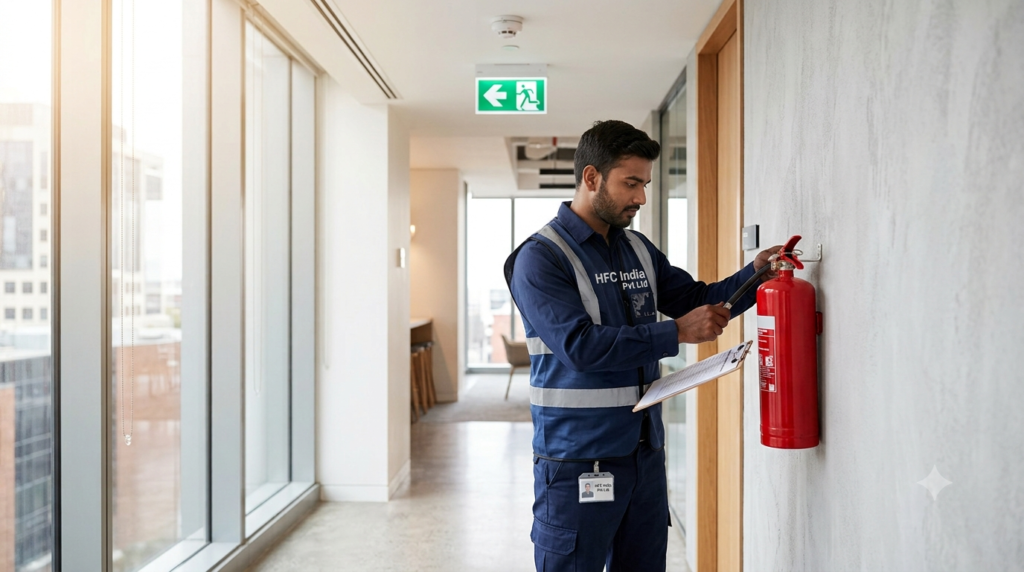
Fire extinguishers need regular inspection, pressure checks, and recharging to actually work when needed. A neglected extinguisher can fail at the worst possible moment, so annual servicing is standard practice for most commercial fire safety programs.
4. Fire Suppression Systems
For larger or higher-risk properties, this covers sprinkler systems, kitchen hood suppression (common in restaurants), and specialized gas-based suppression for server rooms or labs where water damage isn’t an option.
5. Emergency Lighting and Signage
Exit signs and emergency lighting keep evacuation routes visible during a power outage or heavy smoke, when normal visibility drops fast.
6. Fire Safety Training
Staff and building occupants are trained on evacuation procedures, extinguisher use, and how to respond calmly under pressure. Regular fire drills fall under this category too.
7. Fire Safety Compliance and Documentation
Providers help businesses meet local fire codes and regulations, maintaining the paperwork needed to pass inspections and avoid penalties.
Why Fire Safety Services Matter
It’s easy to treat fire safety as a box-ticking exercise — until the day it isn’t. A few reasons these services are worth taking seriously:
- They save lives. Early detection and clear evacuation routes are often the difference between a close call and a tragedy.
- They protect property and income. A single fire can shut a business down for months, or permanently.
- They’re often legally required. Skipping fire risk assessments or extinguisher servicing can lead to fines, failed inspections, or even criminal liability for building owners.
- They lower insurance costs. Insurers frequently offer better rates to properties with documented, up-to-date fire safety measures.
Fire Safety Services for Homes vs. Businesses
Residential fire safety tends to be simpler — smoke alarms, a couple of extinguishers, and a family evacuation plan usually cover it. Commercial fire safety is more involved, since larger buildings, higher occupancy, and specific industry regulations (restaurants, hospitals, warehouses) all carry different risks and legal requirements.
If you manage a business, it’s worth working with a provider who understands your specific industry’s fire code requirements, rather than a generic one-size-fits-all package.
How to Choose a Fire Safety Service Provider
When comparing providers, look for:
- Proper licensing and certification in your region
- Experience with your property type (retail, industrial, residential, etc.)
- Clear, itemized service reports after every inspection
- 24/7 emergency support, not just scheduled visits
- Transparent pricing with no hidden maintenance fees
A quick way to vet a company is to ask how they handle re-inspections and what happens if equipment fails a test. A reliable provider will have a clear process, not a vague answer.
Frequently Asked Questions About Fire Safety Services
What are fire safety services in simple terms? Fire safety services are professional inspections, equipment maintenance, and training programs designed to prevent fires and keep people safe if one occurs.
Are fire safety services legally required? In most regions, commercial properties are legally required to have a fire risk assessment, working fire alarms, and serviced extinguishers. Requirements vary by location and building type.
How often should fire extinguishers be serviced? Most fire codes require annual servicing, though high-risk environments like commercial kitchens may need more frequent checks.
Do homeowners need fire safety services too? While less regulated than commercial properties, homeowners benefit from smoke alarm testing, extinguisher checks, and having a basic evacuation plan in place.
What’s the difference between fire prevention and fire suppression? Fire prevention focuses on stopping a fire before it starts (like fixing electrical hazards), while fire suppression deals with controlling or extinguishing a fire that’s already burning, such as sprinklers or suppression systems.