
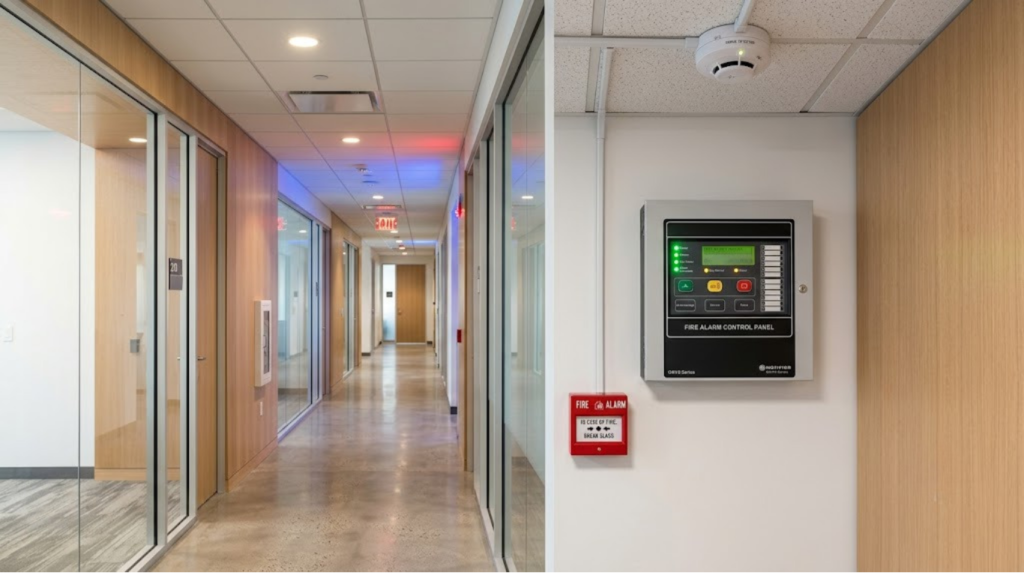
When it comes to protecting a building, most people don’t think about fire safety until something goes wrong. But choosing the right setup ahead of time can be the difference between a minor scare and a major disaster. At HFC India Pvt Ltd, this is a conversation we have with clients almost daily — and the truth is, there’s no single “best” system. There are different types of fire alarm systems, each built for a different kind of space. Let’s go through them properly.
What Are the Different Types of Fire Alarm Systems?
Fire alarm system classification generally comes down to three things: how a system detects fire, how it reports that detection, and how precisely it can locate the problem. Understanding the types of fire alarm systems and their uses helps you avoid over-spending on a system your building doesn’t need — or worse, under-investing in one it does.
Here’s a breakdown of the main fire alarm system types in use today.
Conventional Fire Alarm System
A conventional fire alarm system is the older, tried-and-tested option. Detectors and call points are grouped into zones, so when something triggers, the control panel tells you which zone has the issue — not the exact device. It’s a solid, affordable choice for smaller buildings like single-storey offices or shops, where narrowing down a fire to “Zone 2” is good enough to act fast. The tradeoff shows up in bigger buildings, where “somewhere in this section” can slow down response time.
Addressable Fire Alarm System
An addressable fire alarm system is the more advanced answer to that problem. Every detector and device gets its own unique address on the network, so the panel knows exactly which unit triggered — not just the general area. This directly answers a question a lot of people search: how does an addressable fire alarm system work? The panel continuously communicates with each device individually, monitoring its status and pinpointing the exact source of an alarm. It’s the standard for hospitals, malls, and multi-floor commercial buildings where every second of clarity matters.
A more refined version, the analog addressable fire alarm system, measures actual smoke or heat levels at each detector instead of a simple on/off trigger, which cuts down false alarms considerably.
Wireless Fire Alarm System
A wireless fire alarm system connects detectors and panels through radio signals instead of cables. This is ideal for heritage structures, retrofits, or any space where running new wiring would be expensive or disruptive. It’s quicker to install and less invasive, though it does require regular battery monitoring and a stable signal to stay reliable long-term.
Hybrid Fire Alarm System
A hybrid fire alarm system blends wired and wireless components into one setup. It’s often the practical choice when expanding an existing building — you keep the wired backbone in the main structure and add wireless detectors in extensions or hard-to-reach areas, without a full rewiring job.
Intelligent Fire Alarm System
An intelligent fire alarm system builds on addressable technology with onboard analytics that can tell the difference between real fire conditions and false triggers like steam or cooking smoke. For large commercial or industrial sites, this often pays for itself simply by cutting down nuisance alarms and unnecessary evacuations.
Conventional vs Addressable Fire Alarm System
This is probably the most searched comparison in fire safety, so let’s settle it. The difference between conventional and addressable fire alarm systems really comes down to precision and scale. Conventional systems are cheaper and simpler — fine for small, single-zone buildings. Addressable systems cost more but scale much better, offer faster fault diagnosis, and are often required by code for larger or high-occupancy structures.
So when comparing addressable vs conventional fire alarm setups: smaller and simpler buildings can lean conventional, while anything larger, multi-storey, or safety-critical should go addressable.
Fire Alarm System Components
Regardless of type, most systems share the same core components:
- Fire alarm control panel — the central unit that receives and processes signals
- Fire alarm detectors — smoke, heat, or combination sensors
- Manual call points — for human-activated alarms
- Sounders and strobes — audible and visual warnings
- Monitoring/notification modules — links to fire stations or building management systems
Knowing the basic fire alarm system components makes it much easier to have a productive conversation with your installer instead of just picking the cheapest quote.
Fire Alarm Systems for Commercial Buildings
A fire alarm system for commercial buildings has to be matched to the specific environment:
- Offices typically do well with addressable systems for accurate multi-floor location reporting.
- Factories often need heat detectors alongside smoke detection, since dust and fumes can set off false alarms.
- Warehouses need wide-coverage detectors suited to open, high-ceiling layouts.
- Hospitals almost always require addressable or intelligent systems, since evacuation isn’t instant and exact location data matters for staff response.
Types of Fire Alarm Systems in India
For anyone researching fire alarm system types in India, compliance is just as important as the technology itself. Fire alarm system standards in India are shaped largely by the National Building Code (NBC) and relevant BIS codes, along with local fire department clearance requirements. Fire alarm system requirements in India can vary by state and building category, so working with a provider who understands both the technical and compliance side matters. This is exactly where HFC India Pvt Ltd supports clients — from initial site assessment through installation and certification.
Frequently Asked Questions
What are the 4 types of fire alarm systems?
Most commonly: conventional, addressable, wireless, and hybrid — with intelligent systems increasingly considered a fifth category.
Which type of fire alarm system is best for a building?
It depends on the building’s size and complexity. Small buildings do fine with conventional systems; larger or high-occupancy buildings need addressable or intelligent systems.
How do I choose the right fire alarm system?
Look at building size, occupancy type, budget, and local compliance rules before deciding.
How does a fire alarm system detect fire?
Through smoke, heat, or flame detectors that sense environmental changes and send signals to the control panel.
What’s the difference between a fire alarm and a fire detection system?
A detection system identifies the fire condition itself; the alarm system is what actually notifies occupants and emergency services.
Picking a fire alarm system isn’t about grabbing the most advanced option on the shelf — it’s about matching the system to your building’s actual needs. If you’re not sure where to start, HFC India Pvt Ltd can carry out a proper site assessment and recommend a setup that fits both your space and your budget.